
When Is an Apology Not Good Enough
- by Dr. Usher
- Opinion
- Copyright November 9, 2025
- 181.1k+
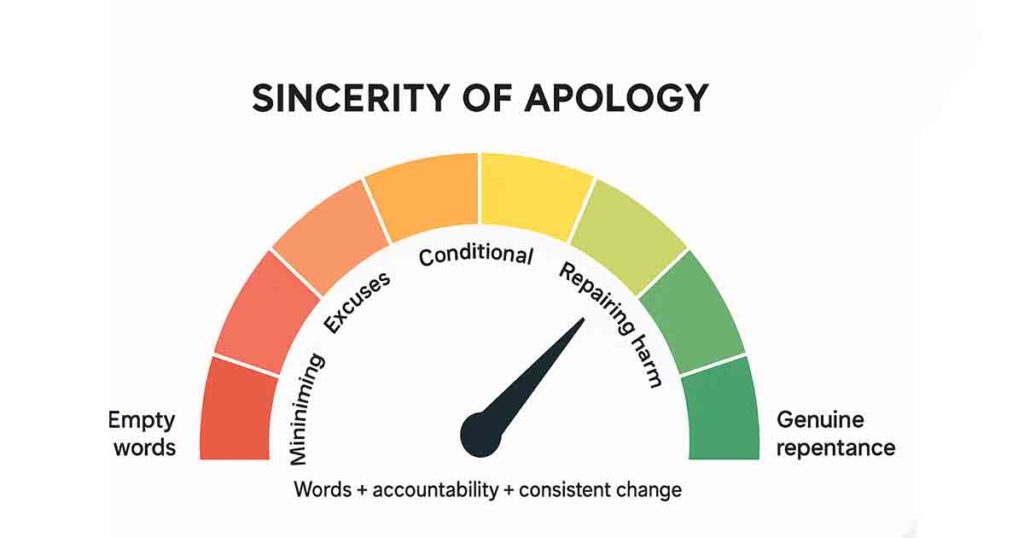
Many people ask, “When is an apology not enough?” or “What makes an apology insufficient?” These questions often come from those who have been deeply hurt by someone’s wrongdoing. This may include emotional abuse, lies, betrayal, manipulation, physical abuse, cheating, or financial deceit. Some have suffered years of disrespect in relationships where apologies were repeated but behavior never changed.
It is common for people to believe that an apology must be followed by action or a visible change in behavior. They feel that words alone mean nothing unless there is proof that the offender has changed. For example, if someone lies, steals, or hits you and then says, “I’m sorry,” the apology may not feel sincere unless you see repentance followed by accountability. This belief often comes from the desire to feel safe again. People want reassurance that the same pain will not happen twice.
However, this raises an important question. Who decides when an apology is good enough? Who has the authority to demand more than an apology? Some believe the offender should perform an act of restitution to prove they are truly sorry. Yet restitution is often subjective. You simply must learn to accept the apology at face value.
People who cannot accept an apology at face value usually demand evidence of sincerity or change. This distrust of someone’s apology is usually based in fear. People who have been lied to, abused, or betrayed are afraid of being hurt again. They believe that if they can see outward change, they will be safe. But the truth is, no amount of outward effort can guarantee that the offender will never repeat the same behavior. Even if the person seems to change, no one can truly know what is happening inside their heart. Some individuals are skilled at pretending to change while continuing the same behavior in secret.
The healthiest response is not to test another person’s sincerity, but to strengthen your own boundaries. Accept the apology at face value, not because you trust the person, but because you release yourself from the burden of judgment. You cannot control whether their apology is genuine, but you can control what happens next.
Your fear of being hurt again is not really about them. It is about your boundaries. When you fail to set clear limits, you leave yourself vulnerable to repeated harm. Many people reject apologies not because they doubt the other person, but because they have not learned to protect themselves. The key is not demanding proof of change, but developing the strength to say “no” when necessary.
If you want to move forward without resentment or fear, focus on building your emotional safety. The following five steps can help you set firm and healthy boundaries.
Five Practical Steps to Protect Yourself After an Apology
Identify your emotional triggers.
Notice what situations make you feel unsafe or uneasy. For example, if a partner’s raised voice makes you feel anxious, or if certain phrases remind you of past abuse, pay attention to those feelings. Write them down. Recognizing your triggers gives you the power to pause before reacting and helps you protect yourself more effectively.State your limits clearly.
Tell people exactly what behavior you will not accept. You can say, “I do not allow yelling or insults,” or “If you lie to me again, I will need to end this relationship.” Speak calmly and mean what you say. Clear communication lets others know your limits and reminds you to honor your own boundaries.Enforce your boundaries consistently.
When someone crosses a line, take action right away. If a friend keeps sharing your personal information after you asked them not to, stop confiding in them. If a partner continues to be physically or verbally abusive, seek safety and contact a support network. Boundaries are not real unless you enforce them with consistency.Learn to forgive while using wisdom.
Forgiveness means freeing your heart from bitterness, not returning to a harmful situation. You can forgive an abuser or a liar without immediately restoring close fellowship with them. For example, you might choose to forgive someone privately in prayer while keeping your distance to protect your peace. Forgiveness is a command from God and it brings healing to your spirit. Restoration of trust, however, is a process that takes time and proof of genuine change. Forgive fully, but use wisdom as you decide what level of closeness is safe and healthy.Build your confidence through self-respect.
Take care of your emotional and spiritual health. Spend time in prayer, counseling, or reflection. Engage in activities that remind you of your worth, such as volunteering, learning something new, or reconnecting with supportive friends. When you respect yourself, you will not feel pressured to accept empty apologies or remain in relationships that drain your peace.
One thing I want to say as I close is this: if an apology is good enough for God, then it should be good enough for you. You are not greater than God. The Word says, “If we confess our sins, He is faithful and just to forgive us our sins and to cleanse us from all unrighteousness” (1 John 1:9). So forgive others as He forgave you. Let go of the need to measure their sincerity or demand proof of change. Instead, protect your peace by setting firm boundaries that prevent you from becoming a victim again. Forgive freely, love wisely, and walk in the freedom that comes from trusting God.
Note: All comments on this thread have been disabled to protect your privacy. If you have comments or prayer requests, please email: [email protected]
Nota: Todos los comentarios en esta publicación han sido deshabilitados para proteger tu privacidad. Si tienes comentarios o peticiones de oración, por favor escribe a: [email protected]